
At a glance
- Some people with pacemakers can have an MRI, but only if the device and its settings are suitable.
- Never book or attend an MRI without telling the imaging team that you have a pacemaker.
- Your pacemaker will usually need to be checked before and after the scan by a specialist team.
- If your device is not suitable for MRI, your doctor may recommend a different scan.
Short answer
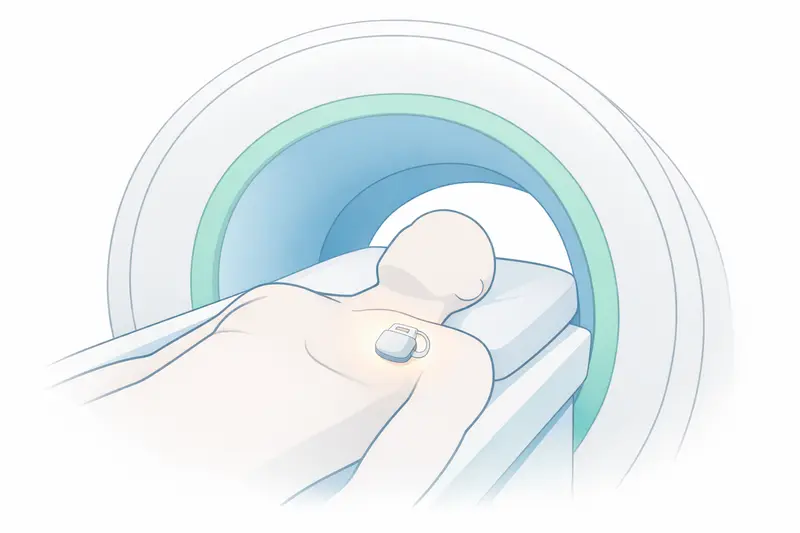
Yes, some people with pacemakers can have an MRI, but it depends on the exact type of pacemaker, the leads, your medical condition, and the hospital’s safety protocol. Many newer systems are designed to be “MRI-conditional,” meaning an MRI may be possible under specific conditions. Older or non-compatible systems can make MRI more risky. Before the scan goes ahead, the radiology team and the cardiac device team usually need to confirm that it can be done safely.
What to know
Why MRI can be a concern
MRI uses a strong magnetic field. In some pacemakers, this can interfere with device settings, cause lead heating, or affect how the pacemaker functions during the scan. That is why MRI is not routine for everyone with a pacemaker unless the device has been carefully checked first.
What makes an MRI possible
An MRI may be possible if your pacemaker system is MRI-conditional and the scan meets the manufacturer’s safety requirements. This usually means the pacemaker model, the leads, the part of the body being scanned, and the MRI machine settings all need to match the approved conditions. Even then, the scan should be done in a centre that follows a formal pacemaker MRI protocol.
What you should do before the scan
Tell the MRI department and your doctor as early as possible that you have a pacemaker. If you have a device ID card, bring it with you. The team may need details such as the make and model, when it was fitted, and whether you rely on it to keep your heart rhythm stable. You may also need a device check before and after the MRI.
If MRI is not suitable
If your pacemaker is not considered safe for MRI, your doctor may recommend another test, such as a CT scan, ultrasound, or another type of imaging, depending on what needs to be assessed. The safest option depends on the part of the body being examined and the reason for the scan.
When to seek medical advice
- Urgent: Seek immediate medical help if you have a pacemaker and develop chest pain, severe shortness of breath, fainting, or a fast or irregular heartbeat.
- Before any MRI: Contact your doctor or scan provider if you have been booked for an MRI and are not sure what type of pacemaker or leads you have.
- After a scan or device check: Get medical advice promptly if you notice dizziness, palpitations, new weakness, or feel that your pacemaker is not working normally.
Continue reading
If you want to understand what happens during imaging tests, read our broader article on what to expect from an MRI scan. You can also explore our main Examinations and Treatments Explained for Patients hub for straightforward guidance on common tests, procedures, and safety questions.
Sources
NHS: MRI scan | American Heart Association: Devices to treat arrhythmia | RadiologyInfo: MRI Safety


