
At a glance
- Most back pain does not need an MRI straight away.
- Doctors often recommend time, movement, and simple treatment first because an early MRI rarely changes treatment.
- An MRI is usually considered if there are red flag symptoms, severe nerve problems, or pain that is not improving.
Short answer
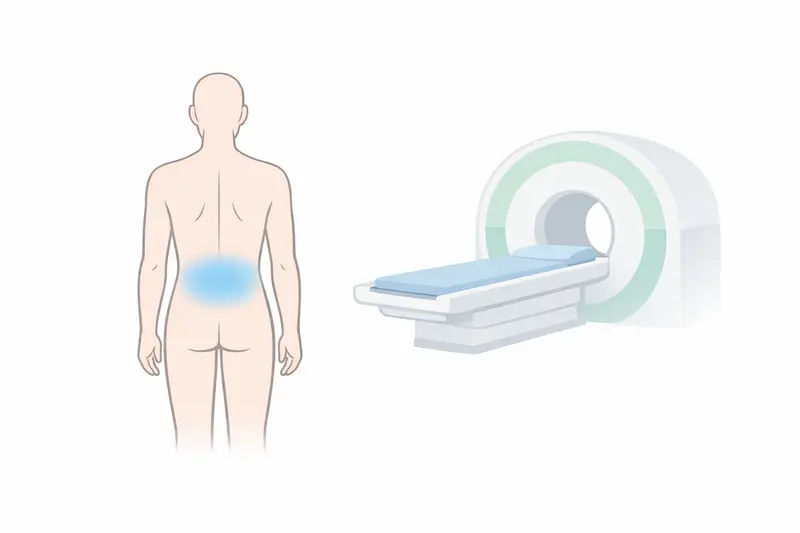
Your doctor may not be ordering an MRI for your back because, in many cases, it is not the best first step. Back pain is very common and often improves within a few weeks with self-care, staying active, and simple pain relief. MRI scans can show age-related changes that are common even in people without pain, so having one too early can lead to unnecessary worry, further tests, or treatment that may not help. Doctors usually reserve MRI for situations where the result is likely to change management, such as suspected nerve compression, serious underlying disease, or persistent symptoms that are not improving.
What to know
Most back pain gets better without a scan
Low back pain is often caused by muscle strain, irritated joints, or other common problems that do not require imaging. Early treatment is usually based on your symptoms and examination rather than on scan findings. That is why your doctor may suggest keeping active, using pain relief if appropriate, and reviewing your symptoms after a short period.
An MRI can find changes that are not the real cause of pain
Many healthy adults have disc bulges, degenerative changes, or other findings on MRI even when they have no back pain. If these age-related changes are found, they can make the problem seem more serious than it is. Your doctor may be trying to avoid unnecessary worry and treatments driven by scan findings rather than your actual symptoms.
Doctors usually order MRI when it will change management
An MRI is more likely to be useful if you have symptoms suggesting a slipped disc pressing on a nerve, pain travelling down the leg with weakness or numbness, signs of infection or cancer, or back pain that has lasted long enough that an injection, procedure, or surgery is being considered. If the result would not change the treatment plan, a scan may not be helpful at this stage.
It is reasonable to ask what the plan is instead
If you are unsure, ask your doctor what they think is causing the pain, what warning signs to watch for, how long recovery is likely to take, and when imaging might become necessary. This can help you understand whether the decision is based on good evidence rather than your symptoms being dismissed.
When to seek medical advice
- Get urgent medical help now if you have new trouble controlling your bladder or bowels.
- Get urgent medical help now if you have numbness around the buttocks, genitals, or inner thighs.
- Seek urgent review if you have significant leg weakness, worsening numbness, or difficulty walking.
- Seek medical advice promptly if you have fever, feel very unwell, or have back pain after an infection.
- Seek medical advice promptly if you have unexplained weight loss, a history of cancer, or pain that is constant and not easing.
- Seek urgent care after a fall, road traffic accident, or other injury, especially if you are older or have osteoporosis.
Continue reading
If you want to understand more about when doctors decide to order tests first, read our broader article on imaging for back pain, then visit our examinations and treatments guide for patients for a clearer overview of how doctors decide which tests are needed.
Sources
NICE: Low back pain and sciatica in over 16s | American College of Radiology: Low Back Pain Appropriateness Criteria | National Institute of Neurological Disorders and Stroke: Low Back Pain


