
At a glance
- A colonoscopy can both find and remove some precancerous growths during the same test.
- Stool tests are less invasive and useful for screening, but they can miss some polyps and cancers.
- A positive stool test usually means you still need a colonoscopy to identify the cause.
- The “better” test depends on your risk, symptoms, age, and whether you can safely have the procedure.
Short answer
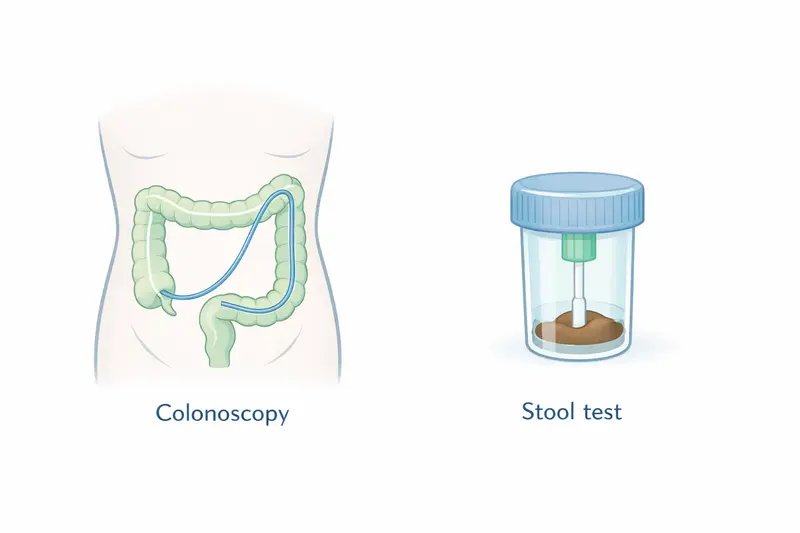
A colonoscopy is often considered better than a stool test because it provides a direct view of the inside of the colon and allows the doctor to remove polyps or take biopsies during the same procedure. Stool tests can be very useful for routine screening and are easier to do at home, but they do not examine the bowel directly and cannot treat anything. If a stool test is abnormal, a colonoscopy is usually the next step. In general, colonoscopy is more thorough, while stool tests are more convenient.
What to know
Why colonoscopy is more complete
During a colonoscopy, a specialist uses a thin, flexible camera to examine the lining of the colon. This allows them to identify growths, bleeding, inflammation, or suspicious changes that a stool test may not detect. If small polyps are found, they can often be removed immediately, which may help prevent bowel cancer from developing later.
What stool tests can and cannot do
Stool tests look for hidden blood or abnormal DNA in a bowel motion sample. They are useful because they are simple, private, and usually do not require bowel preparation, sedation, or time away from work for a procedure. However, they cannot show exactly where a problem is, and a normal result does not completely rule out bowel disease. They are better suited to screening than to investigating symptoms.
When a stool test may still be a good choice
For people at average risk who have no bowel symptoms, a stool test may be a reasonable first screening option. This may be especially helpful if you prefer a non-invasive test or cannot easily arrange a colonoscopy. In many screening programs, stool tests are used first because they are easier to repeat regularly.
When colonoscopy is usually preferred
Colonoscopy is usually preferred if you have symptoms such as blood in the stool, an ongoing change in bowel habits, unexplained weight loss, iron deficiency anaemia, or a strong family history of bowel cancer or polyps. It may also be recommended if you have had polyps before, have inflammatory bowel disease, or have a positive stool test. In these situations, direct examination is more useful than a home screening test.
When to seek medical advice
- Blood in your stool, black stools, or rectal bleeding
- Persistent change in bowel habits lasting more than a few weeks, such as ongoing diarrhoea or constipation
- Unexplained weight loss or loss of appetite
- Ongoing abdominal pain, bloating, or a feeling that the bowel does not empty properly
- Iron deficiency anaemia, unusual tiredness, or shortness of breath
- A positive stool test, which should be followed up promptly
- Red flag: Seek urgent medical care if you have heavy rectal bleeding, severe abdominal pain, fainting, or signs of bowel obstruction such as vomiting and a swollen abdomen
Continue reading
If you want to compare your screening options in more detail, read our broader article on what to expect from colonoscopy and preparation. You can also explore our Examinations and Treatments Explained for Patients hub for clear, practical information on common tests and procedures.
Sources
CDC: Colorectal Cancer Screening | NHS: Colonoscopy | National Cancer Institute: Colorectal Cancer Screening Fact Sheet


