
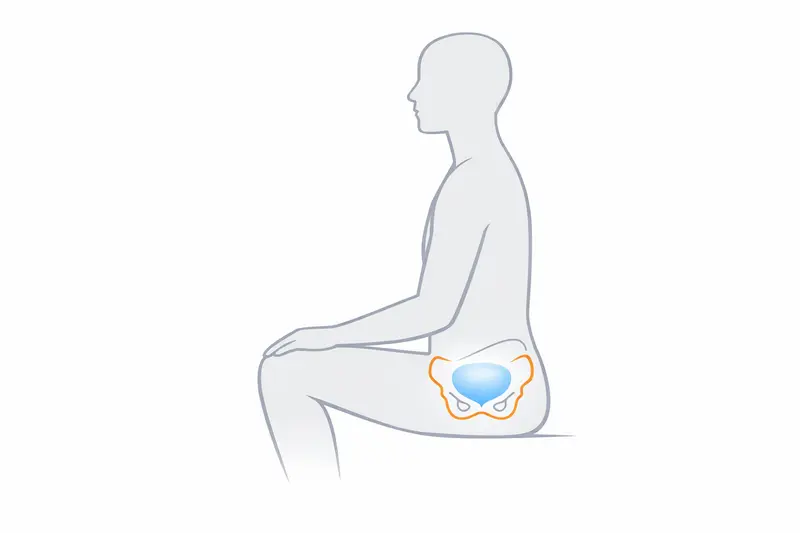
At a glance
- A full bladder helps move the bowel out of the way so the pelvic organs are easier to see on ultrasound.
- It is mainly needed for a transabdominal pelvic ultrasound, where the probe is moved over the lower abdomen.
- You may be asked to drink water before the scan and avoid urinating until it is finished, or until the sonographer says you can empty your bladder.
- If your pain is severe or you cannot hold urine, tell the clinic, as they may adjust the timing or scanning approach.
Short answer
You may need a full bladder for a pelvic ultrasound because it provides a better acoustic window, helping the ultrasound waves show the pelvic organs more clearly. When the bladder is full, it pushes the bowel upward and can make the uterus and ovaries easier to see, especially during a transabdominal scan. This can improve image quality and help the examiner obtain the information they need more efficiently.
What to know
It depends on the type of pelvic ultrasound
A full bladder is most often needed for a transabdominal pelvic ultrasound. In this type, the probe is placed on the skin of the lower abdomen. If you are having a transvaginal ultrasound, you are often asked to empty your bladder first, because an overly full bladder can make the internal scan less comfortable and less informative. If you are unsure which type of scan you are having, check with the clinic before your appointment.
How a full bladder helps
Ultrasound images are created using sound waves. A full bladder helps by providing a clearer path for those waves and by gently displacing nearby bowel loops, which can otherwise obscure the view. This can help the sonographer see the uterus, endometrium, ovaries, and surrounding pelvic structures more clearly.
What you are usually asked to do
Instructions vary by clinic, but a common approach is to drink several glasses of water, often about 1 hour before the scan, and not pass urine until told. Some centres give a specific amount, such as 500 to 1000 mL of water. You do not usually need a painfully overfilled bladder. The goal is comfortably full, not severe discomfort. If you accidentally urinate before the scan, tell the staff. They may simply ask you to drink more water and wait a little longer.
If your bladder is too full or you are uncomfortable
Tell the sonographer if you are in pain, feel that you may leak, or do not think you can hold on. They may be able to start the scan sooner, let you empty a small amount, or change the order of the examination. If you have bladder problems, are pregnant, have pelvic pain, or are bringing a child for the scan, it is especially sensible to ask for clear instructions in advance.
When to seek medical advice
- Seek urgent medical advice if you have severe pelvic or lower abdominal pain, heavy vaginal bleeding, fever, fainting, or dizziness.
- Get medical help promptly if you are unable to pass urine, have severe pain from holding a full bladder, or develop marked swelling or distress.
- Contact your clinician if your ultrasound instructions are unclear, especially if you have a catheter, a bladder condition, kidney problems, or recent pelvic surgery.
Continue reading
For more about what happens during this test, read our broader article on pelvic ultrasound preparation and what to expect. You can also explore our main hub on examinations and treatments explained for patients for clear, practical information about common scans and procedures.
Sources
NHS: Ultrasound scan | RadiologyInfo.org: Pelvic Ultrasound | ACOG: Ultrasound Exams


