
At a glance
- Most people with reflux do not need an endoscopy, but some do for safety reasons.
- An endoscopy can check for irritation, ulcers, narrowing, bleeding, or changes in the lining of the food pipe.
- Your clinician is more likely to recommend it if you have red-flag symptoms, long-standing reflux, or reflux that is not improving with treatment.
Short answer
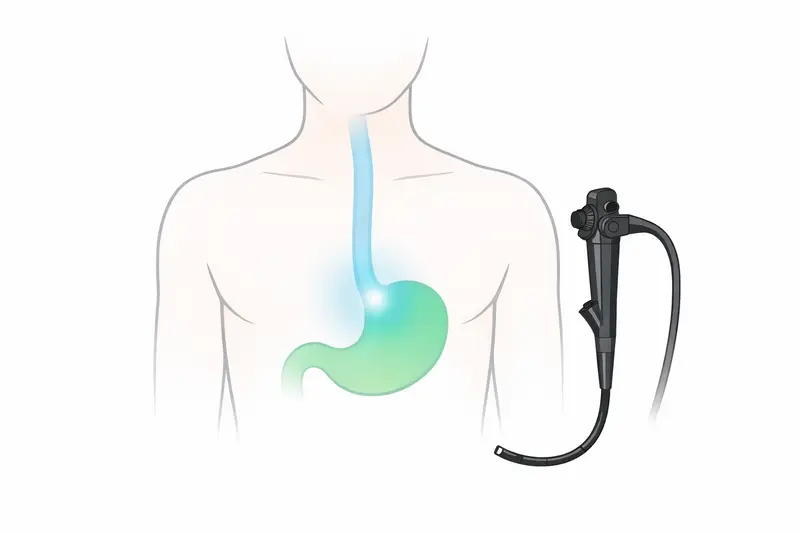
You may need an endoscopy even if you “only” have reflux because reflux symptoms can overlap with other conditions, and acid reflux can sometimes damage the oesophagus without causing obvious warning signs at first. An endoscopy allows a specialist to look directly at your oesophagus, stomach, and the first part of the small bowel for inflammation, ulcers, narrowing, bleeding, or changes such as Barrett’s oesophagus. It is usually recommended when symptoms are severe, persistent, not improving with treatment, or linked to warning signs.
What to know
Reflux symptoms do not always reflect what is happening inside
Heartburn and acid regurgitation are common, and many people can be treated based on symptoms alone. But symptoms do not always reflect the degree of damage. Some people have frequent discomfort with little visible irritation, while others have significant inflammation or complications despite milder symptoms. Endoscopy helps clarify what is happening when your history suggests a higher risk of complications.
Doctors often recommend endoscopy to look for complications
The main reason is not simply to confirm reflux, but to check whether it has caused problems that need different treatment or follow-up. These can include:
- Oesophagitis, which means inflammation of the oesophagus
- Ulcers caused by acid irritation
- Strictures, which are narrowed areas that can make swallowing difficult
- Bleeding from irritation or ulceration
- Barrett’s oesophagus, a change in the lining of the lower oesophagus in some people with long-term reflux
You may be more likely to need one if your reflux is persistent or atypical
Endoscopy is more often advised if your reflux has been present for a long time, keeps coming back, or does not improve as expected with medicines such as acid-suppressing treatment. It may also be considered if your symptoms are not typical, for example if you mainly have chest discomfort, trouble swallowing, repeated vomiting, unexplained anaemia, or weight loss. In these situations, your clinician may want to rule out another cause rather than assume reflux is the only explanation.
The test can also help plan what happens next
If the endoscopy is normal, that can be reassuring and may support continuing medical treatment or reviewing triggers such as late meals, alcohol, smoking, or foods that worsen your symptoms. If it shows inflammation or other changes, your care team can decide whether you need a different medicine plan, a biopsy, monitoring, or further investigation. The procedure is usually short, and many people go home the same day.
When to seek medical advice
- Seek urgent medical advice if you have difficulty swallowing, food getting stuck, vomiting blood, black stools, severe chest pain, fainting, or signs of significant bleeding.
- Make a prompt appointment if you have unexplained weight loss, ongoing vomiting, iron-deficiency anaemia, worsening symptoms despite treatment, or reflux that starts later in life and changes quickly.
- Get emergency help for chest pain with shortness of breath, sweating, or pain spreading to the arm, back, neck, or jaw, because this may not be reflux.
Continue reading
If you want to understand the procedure itself, read the broader article on what happens during an endoscopy and how to prepare. You can also explore the main Examinations and Treatments Explained for Patients hub for other common tests and why they are recommended.
Sources
NHS: Gastroscopy | NIDDK: Upper GI Endoscopy | American Society for Gastrointestinal Endoscopy: Understanding Upper Endoscopy


