
At a glance
-
An MRI is often chosen when doctors need more detail about soft tissues, such as the brain, spinal cord, joints, muscles, ligaments, or organs.
- A CT scan is usually faster and is often preferred for bone injuries, some emergencies, and bleeding.
- MRI does not use ionizing radiation, while CT does.
- The best test depends on what your doctor is trying to assess, how urgent the situation is, and your medical history.
Short answer
Your doctor may have chosen an MRI instead of a CT scan because MRI often provides clearer images of soft tissues and can answer certain clinical questions more accurately. It is commonly preferred for problems involving the brain, nerves, spine, joints, ligaments, muscles, and some internal organs. MRI also avoids radiation, which may be an important consideration in some situations. CT remains the better choice for many conditions, especially when speed matters, so choosing MRI usually means your doctor believes it is the most useful test for your specific concern.
What to know
What MRI shows better
MRI is especially useful when doctors need detailed images of structures that do not show as clearly on CT. This includes the brain, spinal cord, intervertebral discs, knee or shoulder ligaments, cartilage, pelvic organs, and some liver or kidney findings. For example, if you have ongoing knee pain after a sports injury, numbness from a possible slipped disc, or symptoms suggesting a brain or nerve problem, MRI may provide more helpful detail.
Why CT is not always the first choice
CT scans are excellent for many purposes, but they are not the best test for every question. CT is often used when doctors need fast answers, such as after a major injury, for suspected internal bleeding, or to look closely at bones and lungs. If your problem is less about bone injury or emergency bleeding and more about soft-tissue detail, MRI may be the better fit.
Radiation and safety
One practical reason for choosing MRI is that it does not use ionizing radiation. CT does use radiation, and while a single scan is often appropriate and safe when medically necessary, avoiding radiation can be helpful for some patients or when repeat imaging may be needed. However, MRI is not automatically safer for everyone, because the strong magnet can pose a problem if you have certain metal implants or devices.
What this may mean for your appointment
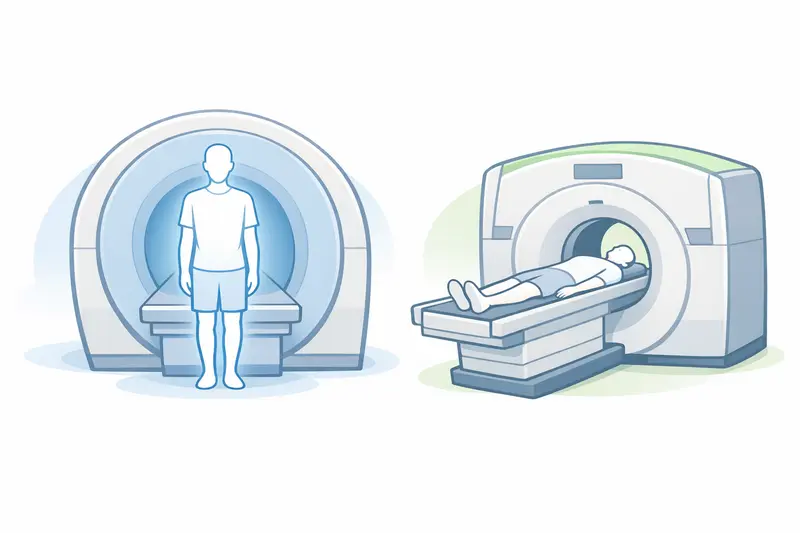
MRI usually takes longer than CT and can feel more enclosed because you lie still inside the scanner. Some MRI scans use contrast dye to improve detail. Before the test, your care team may ask about pacemakers, metal fragments, aneurysm clips, cochlear implants, kidney problems, pregnancy, or claustrophobia. If your doctor chose MRI, it often means they want a more detailed look rather than simply the fastest scan.
When to seek medical advice
- Seek urgent medical care now if you have sudden weakness, trouble speaking, a severe headache, chest pain, seizures, confusion, a major injury, or signs of stroke.
- Tell the imaging team before an MRI if you have a pacemaker, an implanted device, metal in your body or eye, or if you might be pregnant.
- Contact your doctor promptly if your symptoms are getting worse while you are waiting for imaging, such as increasing pain, new numbness, loss of bladder or bowel control, vision changes, or fainting.
Continue reading
If you want to learn more about how imaging tests are chosen, read our broader article on the key differences between CT and MRI scans. You can also explore our Examinations and Treatments Explained for Patients hub for clear answers about what different tests show and what to expect.
Sources
RadiologyInfo: Magnetic Resonance Imaging (MRI) Safety | RadiologyInfo: CT Scans | National Institute of Biomedical Imaging and Bioengineering: Magnetic Resonance Imaging (MRI)


