
Age-based health screenings are not a fixed checklist for everyone, but age does influence which preventive tests a doctor may consider over time. For a broader understanding of how different tests and procedures fit into overall care, see our guide to examinations and treatments explained for patients. Screening aims to detect health problems early, before symptoms appear, when monitoring or treatment may be simpler and more effective.
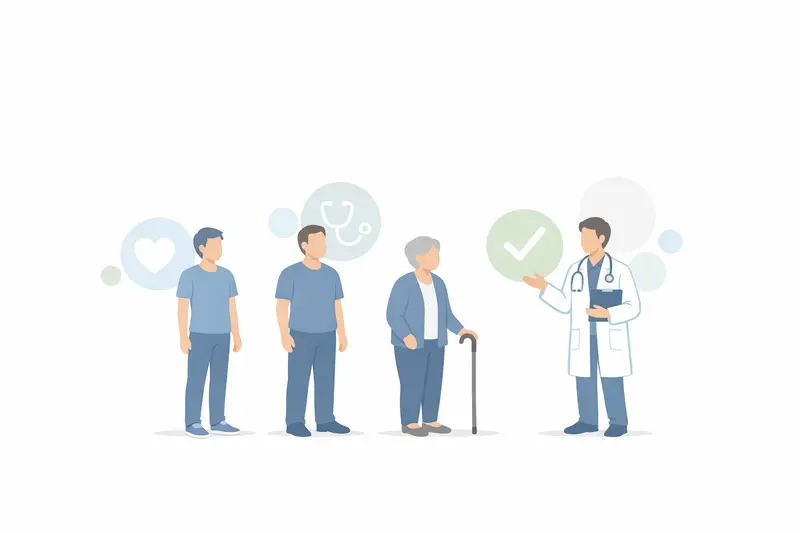
In practice, the recommended health tests by age depend on more than birth date alone. Family history, sex, smoking, blood pressure, weight, pregnancy plans, medicines, and existing conditions all matter. This guide explains which health screenings are often discussed at different stages of adult life, how decisions are made, and why age-based advice has limits.
What health screenings are recommended in your 20s and 30s
In early adulthood, preventive care often focuses on risk factors that can develop silently, such as high blood pressure, sexually transmitted infections, or early metabolic problems. Many people in their 20s and 30s feel well, so routine checks may be the main way to detect issues that do not cause symptoms at first.
Common checks that may be discussed
- Blood pressure measurement: high blood pressure can be present for years without symptoms and can increase long-term cardiovascular risk.
- Weight, waist size, and body mass index: these can help assess the risk of type 2 diabetes, fatty liver disease, and heart disease.
- Cholesterol testing: this may be relevant earlier if there is a family history of early heart disease, high cholesterol, obesity, diabetes, or smoking.
- Blood glucose or HbA1c: a doctor may recommend diabetes screening in adults with overweight, polycystic ovary syndrome, previous gestational diabetes, or a strong family history.
- Cervical screening: depending on national programmes, this may involve HPV testing, cytology, or both, starting in early adulthood.
- Sexual health testing: screening for infections such as chlamydia, gonorrhoea, HIV, hepatitis B, or syphilis may be advised based on sexual history and exposure risk.
- Mental health and alcohol use review: symptoms of depression, anxiety, sleep problems, and harmful alcohol use often first become significant in this age group.
What may be more selective at this age
Most adults in their 20s and 30s do not need broad cancer screening or large panels of blood tests without a clear reason. A doctor may order targeted tests if there are symptoms such as unexplained weight change, fatigue, bowel bleeding, frequent urination, or a strong inherited risk.
Family history can substantially change screening timing. For example, someone with a parent or sibling who had bowel cancer at a younger age may need colorectal screening earlier than standard population-based recommendations. The same can apply to breast cancer, high cholesterol caused by inherited disorders, or diabetes affecting several close relatives.
What health screenings are recommended in your 40s and 50s
From the 40s onward, the risk of cardiovascular disease, type 2 diabetes, bowel cancer, and some other common conditions rises. This is often the stage when the preventive screenings adults ask about become more structured, especially if there are additional risk factors such as smoking, obesity, or a sedentary lifestyle.
Screenings often considered in midlife
- Blood pressure and cardiovascular risk review: this may include cholesterol testing, diabetes testing, and an overall assessment of heart and stroke risk.
- Colorectal cancer screening: many countries begin stool-based screening or colonoscopy pathways in this age range, although the exact starting age varies.
- Breast cancer screening: mammography is commonly introduced in midlife through national screening programmes, usually at set intervals.
- Cervical screening: this continues to be important until the upper programme age limit, which differs by country.
- Eye checks: these can be especially relevant if there is diabetes, high blood pressure, glaucoma in the family, or visual symptoms.
- Skin assessment: people with many moles, very fair skin, a history of sunburn, or changing skin lesions may need closer review.
Why this age range matters
Conditions such as high cholesterol, prediabetes, and early bowel polyps often cause no warning signs. At the same time, menopause, perimenopause, erectile difficulties, sleep apnoea, and weight gain may affect overall risk and quality of life. A preventive review in the 40s or 50s may identify modifiable risks before they lead to a heart attack, stroke, or advanced cancer.
Not everyone needs the same intensity of testing. For example, a non-smoker with normal blood pressure, no diabetes, and no family history may need less frequent follow-up than someone with obesity, smoking exposure, and a previous abnormal test result. You can get a clearer picture of what to expect during these consultations from our summary of what is usually included in a routine health checkup.
What health screenings are recommended after age 60
After 60, screening often shifts toward balancing benefit, life expectancy, existing illnesses, and the likelihood that a test will change management. Age remains relevant, but decisions become more individual, especially when a person already has heart disease, diabetes, lung disease, frailty, or takes several long-term medicines.
Common areas of screening or review
- Blood pressure, cholesterol, and diabetes monitoring: cardiovascular prevention remains important because stroke, heart failure, and kidney disease become more common with age.
- Colorectal cancer screening: this may continue within programme age limits, depending on earlier results and general health.
- Breast cancer screening: some national programmes continue beyond 60, while in other settings decisions are individualised.
- Bone health assessment: osteoporosis risk rises after menopause and with age, especially after fractures, long-term steroid use, low body weight, or smoking.
- Vision and hearing checks: cataracts, glaucoma, macular degeneration, and hearing loss can affect safety, independence, and cognition.
- Vaccination review: while not a screening test, checking protection against influenza, pneumococcal disease, shingles, or COVID-19 can be an important preventive step.
- Abdominal aortic aneurysm screening: in some countries this is offered to older men, especially those with a smoking history.
When screening may become less useful
Some screening tests may offer little benefit if a person has severe frailty, advanced dementia, or major illness that limits life expectancy. In these situations, the burden of testing, false positives, and follow-up procedures may outweigh the benefit. For example, a colonoscopy after an abnormal stool test may be difficult to justify if the risks of sedation or bowel preparation are high and treatment would not be pursued anyway.
How doctors decide which screenings are necessary
Doctors usually combine age with personal risk to decide which preventive tests are appropriate. The goal is not to order the maximum number of tests, but to choose screening that has a reasonable chance of detecting an important problem early and leading to useful action.
Factors that commonly influence screening decisions
- Family history: close relatives with early bowel cancer, breast cancer, ovarian cancer, prostate cancer, heart disease, inherited high cholesterol, or diabetes can change timing and frequency.
- Sex and reproductive history: this affects cervical screening, breast screening, pregnancy-related diabetes risk, and menopause-related bone health.
- Smoking and alcohol: these increase risk for cardiovascular disease, several cancers, chronic lung disease, and liver disease.
- Body weight and activity level: these help estimate diabetes and cardiovascular risk.
- Previous test results: an earlier abnormal smear, polyp, mammogram, or cholesterol result often means more tailored follow-up.
- Current symptoms: screening is for people without symptoms; if symptoms are present, the approach becomes diagnostic rather than screening-based.
A useful example is bowel health. A person aged 52 with no symptoms may enter routine colorectal screening through a stool test. But if the same person has rectal bleeding, iron deficiency anaemia, or an ongoing change in bowel habit, the issue is no longer routine screening and may need direct medical evaluation instead.
Family health screenings by age are therefore best understood as a framework, not a guarantee. A healthy 35-year-old with a strong inherited cancer risk may need earlier evaluation than a low-risk 45-year-old, while an 80-year-old with multiple illnesses may need fewer screenings than a healthy 65-year-old.
Limitations of age-based health screenings
Age-based advice is useful because it offers a practical starting point, but it has clear limits. People of the same age can have very different risks, and not every recommended screening test improves outcomes in every situation.
Important limitations to understand
- False positives: a test may suggest a problem that is later shown not to be present, leading to anxiety or extra procedures.
- False negatives: a normal result does not completely rule out disease.
- Overdiagnosis: some screenings find abnormalities that would never have caused harm during the person’s lifetime.
- Variation between countries: screening ages and methods differ across Europe because national programmes use different evidence reviews and resources.
- Not all tests are useful for healthy people: broad tumour marker panels, whole-body scans, or repeated blood tests without indication can create confusion rather than benefit.
This is why preventive screenings adults see advertised online should be interpreted carefully. More testing is not always better. Good screening is evidence-based, targeted, and linked to clear follow-up pathways.
If there is uncertainty about recommended health tests by age, it is usually most helpful to review personal risk factors, family history, and any previous abnormal results with a doctor. That approach is often more useful than relying on age alone.


