
At a glance
- An EKG checks the electrical activity of your heart and can help show whether chest tightness may be related to a heart problem.
- It is quick, painless, and often one of the first tests done for chest symptoms.
- A normal EKG does not always rule out every heart problem, so your doctor may interpret it alongside your symptoms, examination, and other tests.
- Seek urgent medical help for severe, ongoing, or worsening chest tightness, especially with shortness of breath, sweating, or pain spreading to the arm, back, or jaw.
Short answer
Your doctor may order an EKG for chest tightness to quickly assess whether your heart could be involved. An EKG can show signs of reduced blood flow to the heart, an abnormal heart rhythm, strain on the heart, or other electrical changes that may help explain your symptoms. Because chest tightness can sometimes signal a serious heart problem, an EKG is often done early, even when the cause later turns out to be something less serious, such as muscle strain, acid reflux, anxiety, or a lung problem.
What to know
What an EKG can show
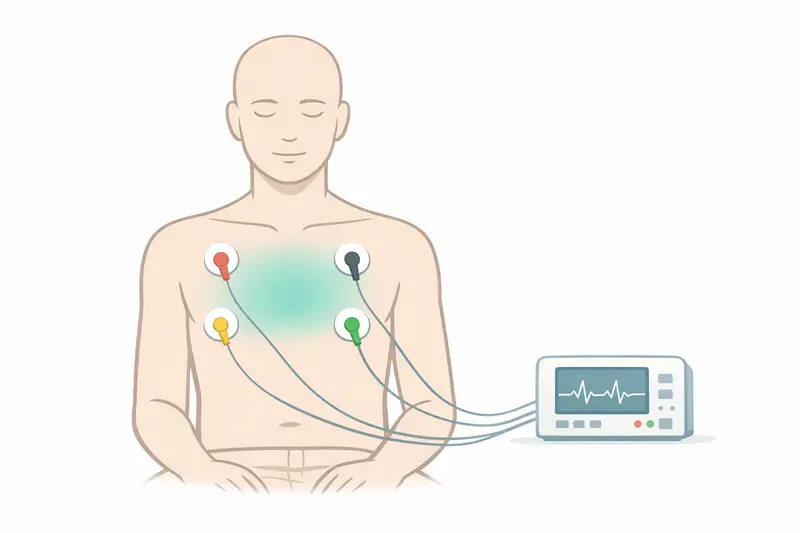
An EKG, also called an ECG, records the timing and pattern of your heartbeat using small sticky pads placed on your chest, arms, and legs. For chest tightness, doctors often use it to look for signs of:
- Reduced blood flow to the heart muscle
- A heart attack or changes suggesting one may be happening
- An abnormal rhythm, such as a heartbeat that is too fast, too slow, or irregular
- Signs that the heart is under strain
Why it is done even if the cause may not be the heart
Chest tightness can have many causes. Some are minor, while others need urgent attention. An EKG is fast and can help your doctor decide whether you need emergency treatment, blood tests, monitoring, or other examinations. Even when the cause is not heart-related, checking the heart early is an important safety step.
What to expect during the test
The test usually takes only a few minutes. You lie still while electrodes are attached to your skin. The test does not send electricity into your body and should not be painful, although removing the stickers may be slightly uncomfortable. You may be asked when the chest tightness started, whether it comes and goes, and whether you also have symptoms such as nausea, dizziness, or shortness of breath.
What the result means
An abnormal EKG can point to a heart-related cause, but it does not always provide a final answer on its own. A normal EKG can be reassuring, but it does not completely rule out every heart problem, especially if symptoms are recent, intermittent, or ongoing. Your doctor may also consider blood tests, a chest X-ray, vital signs, or referral for further heart testing depending on your age, medical history, and risk factors.
When to seek medical advice
- Get urgent medical help now if chest tightness lasts more than a few minutes, is severe, or keeps coming back.
- Seek emergency care if you have chest tightness with shortness of breath, fainting, sweating, nausea, or dizziness.
- Go urgently if the discomfort spreads to the arm, shoulder, back, neck, or jaw.
- Get immediate help if you have a history of heart disease or risk factors such as smoking, diabetes, high blood pressure, or high cholesterol and develop new chest symptoms.
- Red flag: call emergency services right away if you think you may be having a heart attack. Do not drive yourself if you feel very unwell.
Continue reading
If you want to understand the test itself, read our broader article on what an ECG test can show. You can also explore our main Examinations and Treatments Explained for Patients page for other common tests your doctor may order and why.
Sources
American Heart Association | MedlinePlus: Electrocardiogram | National Heart, Lung, and Blood Institute: Electrocardiogram


