
At a glance
- You will usually be asked to remove or lift a sports bra for an EKG.
- EKG chest stickers need direct contact with the skin for the most accurate reading.
- A bra with metal, thick fabric, or compression can interfere with proper electrode placement.
- You can ask for privacy, a gown, or a female clinician if that would make you more comfortable.
Short answer
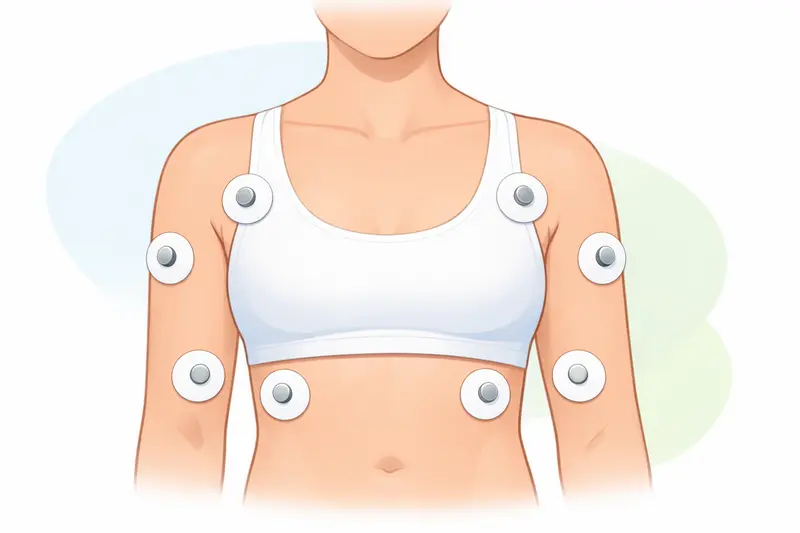
In most cases, you should not expect to keep a sports bra fully on during an EKG, because several electrodes usually need to be placed directly on the skin of the chest. A sports bra may cover the needed areas, especially if it is high-cut, padded, compressive, or contains metal. In some cases, part of the bra can be moved temporarily, but the care team will usually prioritize accurate lead placement while protecting your privacy as much as possible.
What to know
Why a sports bra can be a problem
An EKG records the heart’s electrical activity using small adhesive electrodes placed on the chest, arms, and legs, or on nearby areas. If a sports bra covers the chest positions, the clinician may not be able to place the leads correctly. Tight compression fabric can also make placement more difficult, and metal clips or fasteners may interfere with the test.
What usually happens during the test
You will usually be asked to undress from the waist up and put on a gown or drape. The clinician places the chest electrodes quickly and keeps you covered as much as possible. The test itself is painless and usually takes only a few minutes. If you are wearing a light, low-cut bra, the team may be able to work around it in some situations, but this is often not possible with a sports bra.
How to make the appointment easier
If possible, wear a two-piece outfit so changing is easier. Avoid one-piece athletic wear if you are coming for a heart test. If modesty is important to you, ask in advance whether you will need to remove your bra, whether a gown will be provided, and whether you can have a chaperone or a clinician of the same gender, if available.
What to say if you feel uncomfortable
It is okay to tell the staff if you feel anxious, have cultural or religious concerns, or would like more privacy. You can also ask them to explain where the stickers will be placed before the test starts. That can help you know what to expect and avoid surprises.
When to seek medical advice
- Seek urgent medical help if you have chest pain, shortness of breath, fainting, severe dizziness, or a racing or irregular heartbeat.
- Do not delay an EKG because of clothing concerns if a clinician has advised you to have the test promptly.
- Tell the care team before the test if you have a pacemaker, an adhesive allergy, skin wounds on the chest, or recent chest surgery.
Continue reading
For more detail, read our broader article on what happens during an EKG and how to prepare. You can also explore our main Examinations and Treatments Explained for Patients page for simple guides to common medical tests and procedures.
Sources
MedlinePlus: Electrocardiogram | NHLBI: Electrocardiogram | NHS: Electrocardiogram (ECG)


