
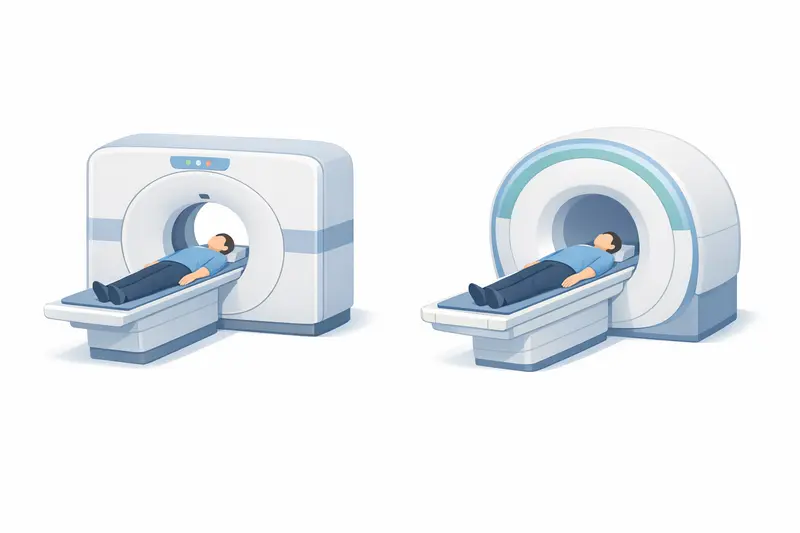
At a glance
- CT scans are often used when results are needed quickly, such as after an injury or in an emergency.
- CT is usually better for assessing bone, bleeding, the lungs, and some chest or abdominal problems.
- MRI is often preferred for soft tissues such as the brain, spinal cord, joints, and some organs, but it takes longer.
- Your doctor may choose CT instead of MRI based on speed, safety, availability, and the part of the body being examined.
Short answer
A CT scan may be used instead of an MRI when doctors need an answer quickly, when they need a clear view of bone, internal bleeding, the lungs, or certain abdominal problems, or when MRI is not suitable for safety or practical reasons. CT scans are faster and more widely available, which is why they are commonly used in emergency care. MRI may provide more detail for soft tissues, but it takes longer and is not safe for some people with certain metal implants or devices.
What to know
CT is often chosen in urgent situations
CT scans are very quick, sometimes taking only a few minutes. This makes them especially useful after a road traffic accident, a fall, a sudden severe headache, suspected stroke, chest pain, or a suspected internal injury. When doctors need to check rapidly for bleeding, fractures, or a serious problem in the chest or abdomen, CT is often the first choice.
CT can be better for some parts of the body
CT is commonly used to assess bones, lung conditions, kidney stones, and internal bleeding. It is also often used to examine the chest, sinuses, and abdomen. For example, if a doctor suspects a broken hip, a facial fracture, appendicitis, or bleeding after a head injury, CT may be more practical than MRI.
MRI is not always possible or suitable
MRI uses a strong magnet, so it may not be safe for some people with certain pacemakers, metal fragments in the body, or implanted devices. MRI also takes longer and may be difficult if you are in severe pain, cannot lie still, or feel very claustrophobic. In these situations, a CT scan may be safer or easier to complete.
CT has trade-offs
CT uses ionising radiation, while MRI does not. Because of this, doctors weigh the benefits and risks before choosing CT, especially in children and during pregnancy. Sometimes a contrast dye is used during CT to make images clearer. If you have kidney problems, an iodine contrast allergy, or are pregnant, tell the healthcare team before the scan.
When to seek medical advice
- Seek urgent medical help now if you have sudden weakness, trouble speaking, a severe head injury, a seizure, chest pain, severe shortness of breath, or signs of stroke.
- Get prompt medical advice if you have ongoing severe pain, unexplained weight loss, coughing up blood, blood in your urine, or symptoms that are getting worse without a clear cause.
- Tell the imaging team before your scan if you are pregnant, may be pregnant, have kidney disease, have had a reaction to contrast dye, or have an implanted medical device.
Continue reading
If you want to understand the differences in more detail, read the broader article on CT and MRI scan differences, including speed, safety, and what each test shows best. You can also explore the main Examinations and Treatments Explained for Patients hub for clear explanations of common scans, tests, and procedures.


