
Key points
- Endoscopy uses a flexible tube with a camera to examine the inner lining of organs or body passages.
- It may be recommended for symptoms such as pain, bleeding, swallowing difficulties, reflux, or changes in bowel habits.
- Preparation varies depending on the procedure and may include fasting, bowel preparation, and a review of medicines.
- Endoscopy can also be used to take biopsies or carry out minor treatments during the procedure.
- It is generally safe, but the risks and limitations depend on the type of procedure and any treatment performed.
Endoscopy is a procedure that allows a doctor to look inside part of the body using a thin, flexible tube with a light and camera. It is commonly used to investigate symptoms such as persistent stomach pain, difficulty swallowing, bleeding, ongoing heartburn, or changes in bowel habits. It can also be used to take tissue samples or carry out minor treatments. For more background on different diagnostic and treatment options, see Examinations and Treatments Explained for Patients.
For many patients, the main questions are why an endoscopy is needed, how to prepare, what happens during the test, and what the risks are. The sections below explain what endoscopy examines, when it is recommended, what you may experience before and during the procedure, and its main limitations.
What an endoscopy procedure examines
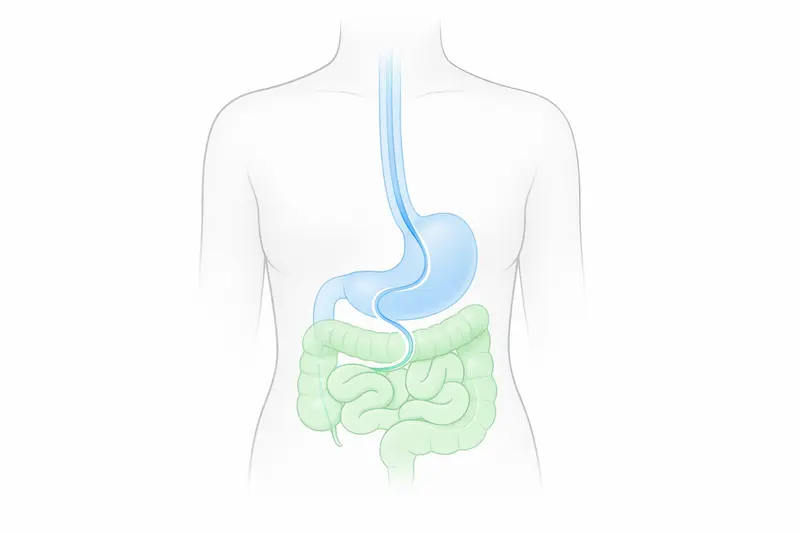
The word endoscopy refers to a group of procedures rather than a single test. In each case, a doctor uses an endoscope to view the lining of an organ or body passage from the inside. The exact area examined depends on the type of endoscopy.
Common types of endoscopy
- Upper gastrointestinal endoscopy examines the oesophagus, stomach, and first part of the small intestine.
- Colonoscopy examines the rectum and colon.
- Sigmoidoscopy examines the rectum and lower part of the colon.
- Bronchoscopy examines the airways and lungs.
- Cystoscopy examines the bladder and urethra.
Some endoscopies are mainly diagnostic, meaning they help identify the cause of symptoms. Others can also be therapeutic. For example, during an endoscopy a doctor may remove a small polyp, stop bleeding, widen a narrowed area, or take a biopsy for laboratory testing.
Because the camera shows the lining directly, endoscopy can reveal inflammation, ulcers, polyps, tumours, bleeding points, narrowing, infection, or other structural changes that may not be clear on blood tests or standard imaging alone.
When doctors recommend an endoscopy
A doctor may recommend endoscopy when symptoms suggest a problem inside the digestive tract, airways, bladder, or another accessible area. The reason for the test depends on the type of endoscopy being planned.
Common reasons for gastrointestinal endoscopy
- Difficulty swallowing or pain when swallowing
- Persistent upper abdominal pain, nausea, or vomiting
- Persistent acid reflux or heartburn that does not improve
- Vomiting blood or passing black, tarry stools
- Unexplained iron deficiency anaemia
- Changes in bowel habits, such as long-lasting diarrhoea or constipation
- Blood in the stool
- Positive screening tests for bowel cancer
Endoscopy may also be used for screening or surveillance. A clear example is colonoscopy after a positive faecal screening test, or follow-up examinations in people with known polyps, inflammatory bowel disease, Barrett’s oesophagus, or a family history that increases cancer risk.
In other situations, endoscopy is recommended after imaging or blood tests suggest a finding that needs direct inspection or biopsy. A scan may show thickening, narrowing, or a suspicious lesion, but tissue sampling through endoscopy may be needed to confirm what it is.
How to prepare for an endoscopy procedure
Preparation depends on which type of endoscopy is being done. The healthcare team usually provides written instructions, and it is important to follow them closely because poor preparation can reduce accuracy or make the procedure less safe. You can find step-by-step advice on how to prepare for medical tests to help make this process smoother.
Food and drink restrictions
For an upper endoscopy, patients are usually asked not to eat or drink for several hours beforehand so the stomach is empty. For colonoscopy, bowel preparation is more extensive. This often includes a special laxative solution and a temporary change in diet, sometimes starting the day before the test. The aim is to clear stool from the bowel so the lining can be seen properly.
Medicines
Some medicines may need special review before the procedure, especially:
- blood thinners such as anticoagulants or antiplatelet medicines
- diabetes medicines, including insulin
- iron tablets, which can affect bowel preparation for colonoscopy
- certain injectable weight-loss medicines if fasting or sedation is planned
Patients should not stop prescribed medicines on their own unless a doctor has advised them to do so. The safest plan depends on why the medicine is being taken and whether a biopsy or treatment may be performed during the endoscopy.
Sedation and transport home
Some endoscopies are done with local anaesthetic only, but many involve sedation. Sedation can make the procedure more comfortable and may reduce memory of it, but it also means reaction times and judgement can remain affected for several hours. If sedation is planned, patients are often told not to drive afterwards and may need someone to accompany them home.
What happens during an endoscopy
The exact steps vary depending on the procedure, but most endoscopies follow a similar pattern. The patient is checked in, basic observations are taken, consent is confirmed, and the doctor or nurse explains what will happen.
During an upper endoscopy
For an upper gastrointestinal endoscopy, the throat may be numbed with a spray, and sedation may be offered. The patient usually lies on their side while the scope is passed through the mouth into the oesophagus, stomach, and duodenum. Breathing is not blocked, although the sensation can feel unfamiliar. Air or carbon dioxide is used to gently expand the area so the doctor can see clearly.
The procedure itself is often quite short, commonly around 5 to 15 minutes if it is purely diagnostic, although it may take longer if biopsies or treatment are needed.
During a colonoscopy
For colonoscopy, the patient usually lies on their side, and the scope is passed through the rectum into the colon. Air or carbon dioxide is again used to open the bowel slightly. This can cause pressure, bloating, or cramp-like discomfort, especially when the scope passes around bends in the bowel. Sedation and pain relief are commonly used, although practice differs between centres and countries.
If a biopsy is taken, patients usually do not feel the tissue sample itself. If a small polyp is removed, this is often done during the same procedure.
After the procedure
Afterwards, patients are monitored for a short time, especially if sedation was used. Mild bloating, wind, or throat soreness can occur, depending on the type of endoscopy. Preliminary findings may be discussed on the same day, but biopsy results usually take longer because the samples must be examined in a laboratory.
Risks and limitations of endoscopy procedures
Endoscopy is widely used and is generally considered safe, but no medical procedure is completely risk-free. The overall risk depends on the type of endoscopy, the patient’s health, whether sedation is used, and whether additional treatment such as biopsy, dilation, or polyp removal is performed.
Possible risks
- bleeding, especially after biopsy or removal of a polyp
- perforation, meaning a tear in the wall of the organ being examined
- infection, although this is uncommon in many routine endoscopies
- reactions to sedation, such as breathing or heart-related problems
- temporary discomfort including bloating, cramping, or a sore throat
Serious complications are uncommon, but patients are usually advised to seek urgent medical attention after the procedure if they develop severe pain, repeated vomiting, high fever, heavy bleeding, black stools after a lower endoscopy, chest pain, or shortness of breath.
Limitations to understand
Endoscopy provides a direct view of the inside surface of an organ, but it does not answer every question. Some conditions affect deeper layers of tissue or structures outside the organ and may still require ultrasound, CT, MRI, blood tests, or other investigations.
A normal endoscopy also does not always rule out disease completely. Very small lesions can occasionally be missed, visibility can be reduced by poor bowel preparation or retained stomach contents, and some symptoms may come from functional disorders that do not produce visible abnormalities. In these situations, the next step depends on the symptoms, test results, and the doctor’s overall assessment.


