
Key points
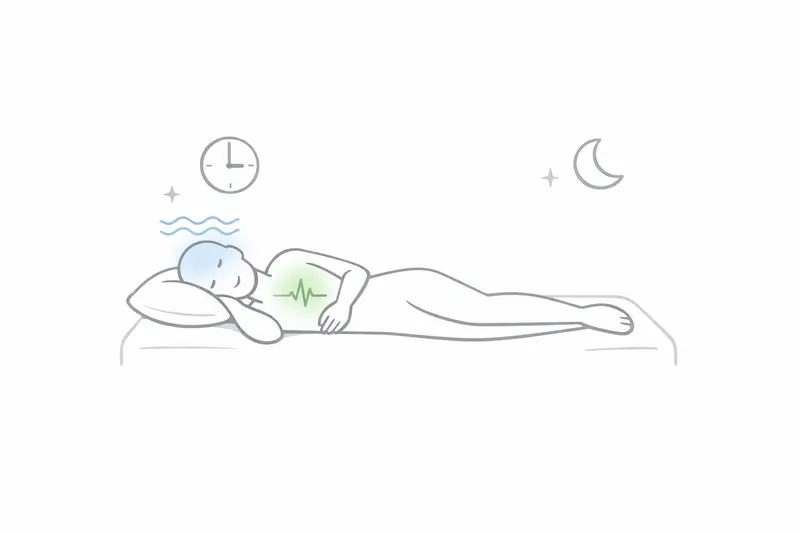
- A sleep study measures breathing, oxygen levels, heart rhythm, movement, and sometimes sleep stages.
- It is often used when sleep apnoea, unexplained daytime sleepiness, or unusual sleep behaviours are suspected.
- Home tests may be enough for some adults with likely obstructive sleep apnoea, but in-lab studies give more detail.
- Results can show breathing disturbance patterns, oxygen drops, sleep fragmentation, and movement-related problems.
- Sleep studies have limits, so results still need to be interpreted alongside symptoms and medical history.
A sleep study is a test used to assess what happens in the body during sleep, especially breathing, oxygen levels, heart rhythm, movement, and sleep stages. For an overview of how different medical tests are used to help diagnose and manage conditions, see Examinations and Treatments Explained for Patients. A doctor may recommend one when symptoms suggest a sleep-related breathing disorder, unusual movements during sleep, or excessive daytime sleepiness that is not otherwise explained.
For many patients, the main questions are simple: when is a sleep study needed, how does it work, and what can it show? The sections below explain what is measured, how to prepare, what the results may indicate, and where the limits of sleep testing lie.
What a sleep study measures during sleep
A sleep study, also called polysomnography when done in full detail, records several body functions at the same time. The exact setup depends on whether the test is performed in a sleep laboratory or at home, but the aim is to understand how sleep and body function interact overnight.
Breathing and airflow
One of the main reasons for sleep testing is to look for breathing disturbances such as obstructive sleep apnoea. Sensors may measure airflow through the nose and mouth, chest and abdominal effort, and the number of pauses or reductions in breathing during the night.
This helps doctors identify patterns such as:
- repeated airway blockage during sleep
- shallow breathing episodes
- breathing pauses associated with oxygen drops
- snoring linked to disturbed airflow
Oxygen level and heart function
A finger probe often measures blood oxygen saturation throughout the night. Some studies also record heart rate and heart rhythm using ECG leads. These measurements can show whether breathing problems are affecting oxygen delivery or causing stress on the cardiovascular system during sleep.
Brain activity and sleep stages
In a full laboratory sleep study, electrodes on the scalp record brain waves. This allows the night to be divided into sleep stages, including light sleep, deep sleep, and REM sleep. Eye movements and chin muscle activity are usually recorded as well, helping distinguish when a person is awake, lightly asleep, or in dream sleep.
This information matters because some problems appear mainly in certain sleep stages. Obstructive apnoea, for example, may be worse during REM sleep or when lying on the back.
Movement and muscle activity
Small sensors on the legs may detect repeated limb movements during sleep. Muscle activity can also help assess unusual behaviours during the night, such as acting out dreams or having frequent arousals associated with movement.
Body position and sleep disruption
Many sleep studies also record body position and brief awakenings. This can show whether symptoms are worse when sleeping supine, or whether the person is waking repeatedly without being fully aware of it. Even if total sleep time seems adequate, fragmented sleep can help explain daytime fatigue, poor concentration, or morning headaches.
When doctors recommend a sleep study
A doctor may recommend a sleep study when symptoms suggest that sleep quality or breathing during sleep is abnormal and the cause is not clear from history alone. The test is usually considered when the result is likely to change further evaluation or management, such as why your doctor orders certain tests at the start of your care.
Possible signs of sleep apnoea
Sleep studies are commonly requested when obstructive sleep apnoea is suspected. Typical features include:
- loud habitual snoring
- witnessed pauses in breathing during sleep
- gasping or choking at night
- excessive daytime sleepiness
- unrefreshing sleep despite enough time in bed
- morning headaches
- poor concentration or memory problems
The need for testing may be stronger if these symptoms occur together with obesity, high blood pressure, atrial fibrillation, type 2 diabetes, or a large neck circumference, because these factors can increase the likelihood of sleep-disordered breathing.
Unexplained daytime sleepiness or unusual sleep symptoms
A sleep study may also be used when someone falls asleep easily during the day, struggles to stay awake in passive situations, or has symptoms suggesting a central sleep disorder. Depending on the pattern, an overnight sleep study may be followed by daytime testing to assess abnormal sleepiness more formally.
Abnormal movements or behaviours during sleep
If a person has repeated jerking of the legs, unusual movements, frequent waking, or behaviours such as shouting, punching, or getting out of bed during sleep, a doctor may request a laboratory-based study. In these cases, added video recording can help relate movements to sleep stage and brain activity.
When a home sleep test may be enough
In some adults with a strong suspicion of obstructive sleep apnoea and no major complicating medical problems, a home sleep apnoea test may be considered. This simpler test usually focuses on breathing, oxygen level, and effort rather than full sleep staging.
However, a home test may be less suitable when there is significant heart failure, chronic lung disease, neuromuscular disease, suspected central sleep apnoea, parasomnias, epilepsy, or unexplained severe insomnia. In such situations, a more detailed in-lab study may provide more reliable information.
How to prepare for a sleep study
Preparation depends on the type of study, but most patients do not need to do anything complicated. The main aim is to make the recording as accurate and representative as possible.
Before the test
Patients are often advised to keep a fairly normal schedule for the days before the study unless told otherwise. Instructions may include avoiding caffeine late in the day, limiting alcohol, and asking in advance whether regular medicines should be taken as usual. Many medicines can affect sleep or breathing, so it is important to tell the medical team what is being used, including over-the-counter products.
Hair and skin should usually be clean and free of heavy oils, gels, or lotions, because sensors need to stick properly.
What to bring and expect overnight
For a laboratory sleep study, it is sensible to bring comfortable nightwear, toiletries, and any evening medicines. The room is generally arranged to allow normal sleep as much as possible, although the sensors and unfamiliar environment can feel unusual at first.
Typical sensors may be placed on the scalp, around the chest, near the nose, on the finger, and on the legs. These are attached before sleep and removed in the morning. The test is not painful, but sleeping with monitoring equipment can feel less natural than sleeping at home.
Preparing for a home sleep test
Home testing usually involves fewer sensors and simpler instructions. A device may be fitted in a clinic or explained in advance for use at home. Patients are generally shown how to place the breathing sensors, chest belt, and oxygen probe correctly.
For a home study, it helps to:
- read the instructions fully before bedtime
- check that the device is switched on properly
- apply the sensors as demonstrated
- sleep as normally as possible
- note anything unusual, such as long periods awake or sensors coming off
If sleep is poor during the test
Many patients worry that they will not sleep enough for useful results. In practice, sleep studies often still provide valuable information even if sleep is shorter or lighter than usual. If the recording is too limited, repeat testing may be considered.
What sleep study results can indicate
Sleep study results do not only say whether someone “slept well” or “slept badly”. They provide objective data that can help identify specific patterns and guide the next step in assessment or management.
Sleep apnoea severity and pattern
One common output is the number of breathing disturbances per hour, often summarised as an apnoea-hypopnoea index. This can help estimate whether sleep apnoea is absent, mild, moderate, or severe. The report may also show whether events were mainly obstructive or central, whether they were worse during REM sleep, and whether sleeping on the back made them more frequent.
Oxygen drops and physiological stress
Results may show how low oxygen levels fell, how often this happened, and how long the drops lasted. Frequent desaturations may support the significance of breathing events, especially when combined with repeated arousals or heart rate changes.
Sleep fragmentation and reduced sleep quality
A study can indicate whether sleep was repeatedly interrupted. Frequent arousals may be related to breathing problems, limb movements, pain, environmental disturbance, or other factors. This can help explain symptoms such as waking unrefreshed, difficulty concentrating, or excessive sleepiness during the day.
Movement disorders or unusual behaviours
If leg sensors show repetitive movements, the report may suggest periodic limb movement disorder in the right clinical context. If video and muscle recordings show abnormal activity during sleep, the findings may support further evaluation for parasomnias or REM sleep behaviour disorder.
Why results need clinical interpretation
The same test result may not mean the same thing for every patient. A mild abnormality may matter more in someone with marked daytime sleepiness, resistant hypertension, or a high-risk occupation such as professional driving. Conversely, a numerical result alone does not confirm the full clinical picture without symptoms, history, and medical context.
Limitations of sleep studies
Sleep studies are useful tools, but they are not perfect and they do not answer every sleep-related question. The type of test used affects how much information can be gathered.
A home test is not the same as a full laboratory study
Home sleep apnoea tests usually do not measure brain waves, so they estimate recording time rather than true sleep time. This means the severity of sleep apnoea may sometimes be under- or overestimated. Home tests are also less useful for detecting parasomnias, many movement disorders, and some forms of central sleep disorder.
A single night may not reflect every night
Sleep can vary from one night to another. Factors such as stress, alcohol, nasal blockage, sleeping position, and unfamiliar surroundings can change the result. Some people sleep differently in the laboratory than they do at home, which can affect interpretation.
Normal results do not always end the evaluation
If symptoms remain strong but the study is inconclusive or technically limited, further testing may still be needed. For example, a patient with persistent excessive daytime sleepiness, dream-enactment behaviour, or suspected nocturnal seizures may require a more specialised assessment even if a simpler first test is not clearly abnormal.
Technical problems can affect accuracy
Sensors can loosen during the night, especially in home testing. Poor signal quality may reduce confidence in the findings or make repeat testing necessary. This is one reason why correct setup and clear instructions matter.
A sleep study is most useful when it is matched to the right clinical question. Choosing between home testing and a full laboratory study, and interpreting the results in context, helps ensure that the test answers the problem it was meant to investigate.


