
Many people notice swollen lymph nodes at some point in their lives, perhaps as a lump under the jaw, in the neck, armpit, or groin. While this can be alarming, swollen lymph nodes are often a sign that your body is fighting an infection. However, there are times when swollen lymph nodes may point to something more serious, such as an underlying disease that needs medical attention. Understanding when to worry and what steps doctors take to investigate swollen lymph nodes can help you feel more informed and reassured.
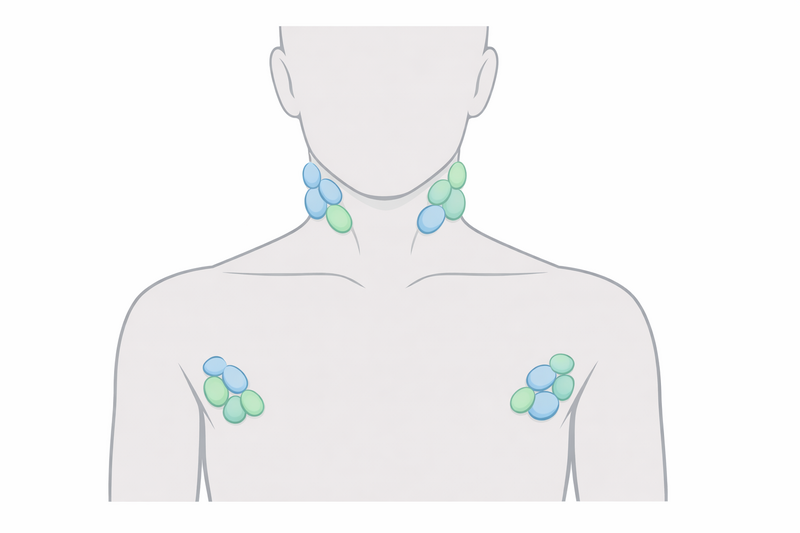
This article explains the most common causes of swollen lymph nodes, what warning signs doctors look for, the tests that may be recommended, and how your healthcare provider decides if imaging or ongoing monitoring is needed.
Common causes of swollen lymph nodes
Lymph nodes are small, bean-shaped glands that play a key role in your immune system. They filter out harmful substances and help your body fight infections. When lymph nodes become swollen, it usually means they are reacting to an infection or inflammation nearby. Some of the most common causes include:
- Viral infections: Such as the common cold, flu, or infectious mononucleosis (glandular fever).
- Bacterial infections: For example, strep throat, dental abscesses, or skin infections.
- Other infections: Such as tuberculosis or certain sexually transmitted infections.
- Local inflammation: Caused by injury, irritation, or autoimmune conditions like rheumatoid arthritis.
- Medications: Some drugs can cause lymph node swelling as a side effect.
In most cases, swollen lymph nodes are harmless and return to normal size once the infection or inflammation resolves. However, persistent, painless, or rapidly growing lymph nodes may require further investigation.
Warning signs doctors evaluate
While most lymph node enlargements are benign, certain signs and symptoms may alert doctors to the possibility of a more serious underlying condition, such as lymphoma (cancer of the lymphatic system) or metastatic cancer (cancer that has spread from another part of the body).
Doctors carefully assess several warning signs, including:
- Size and texture: Lymph nodes larger than 2 cm, hard, fixed (not moving), or irregular in shape may be more concerning.
- Location: Swelling in certain areas (such as above the collarbone or behind the ear) may be more significant than in other regions.
- Duration: Lymph nodes that remain enlarged for more than two to four weeks without a clear cause.
- Associated symptoms: Unexplained weight loss, night sweats, persistent fever, or fatigue.
- Multiple sites: Swelling of lymph nodes in several areas of the body at once may suggest a systemic illness.
- History: A previous cancer diagnosis, recent travel, or exposure to tuberculosis or other infectious diseases.
If any of these features are present, your doctor may recommend additional tests or refer you to a specialist for further evaluation.
Which tests may be recommended
The choice of tests depends on your age, symptoms, medical history, and the findings during your examination. Your doctor may start with basic blood tests to look for signs of infection or inflammation, and may then suggest further investigations if necessary. Common tests include:
- Blood tests: To check for elevated white blood cell count, anemia, or other abnormalities.
- Throat swab, urine, or other cultures: To identify specific infections.
- Serology (antibody tests): To check for viral infections like HIV, Epstein-Barr virus (EBV), or cytomegalovirus (CMV).
- Fine needle aspiration (FNA): A thin needle is used to remove a small sample of cells from the lymph node for analysis.
- Excisional biopsy: In some cases, the entire lymph node or a portion of it is surgically removed for detailed examination by a pathologist.
These tests help doctors determine the cause of the lymph node enlargement and rule out serious conditions such as cancer or tuberculosis. Not every patient with swollen lymph nodes will need all of these tests; your healthcare provider will recommend what is appropriate for your situation.
When imaging is needed
Imaging studies can provide more detailed information about the size, shape, and internal structure of lymph nodes and surrounding tissues. Your doctor may recommend imaging tests if:
- The lymph nodes are deep or difficult to examine by touch.
- There are suspicious features (such as rapid growth or abnormal location).
- There is a need to identify the extent of lymph node involvement.
- Other causes, such as an abscess or tumor, need to be ruled out.
Common imaging tests include:
- Ultrasound: This is often the first imaging test used, as it is non-invasive and can distinguish between solid and fluid-filled nodes.
- CT (computed tomography) scan: Provides detailed cross-sectional images, useful for assessing lymph nodes in the chest, abdomen, or pelvis.
- MRI (magnetic resonance imaging): Used less frequently, but helpful for certain areas or for people who cannot have CT scans.
- PET (positron emission tomography) scan: Sometimes used if cancer is suspected, to look for areas of increased metabolic activity.
Imaging results, combined with clinical findings and lab tests, guide doctors in making a diagnosis and planning further management.
How doctors monitor changes
In many cases, especially when the likely cause is a viral infection, doctors may recommend a “watch and wait” approach. This involves monitoring the lymph nodes over time to see if they decrease in size or resolve completely.
Monitoring can include:
- Physical examination: Your doctor may check the size, consistency, and tenderness of the lymph nodes at regular intervals.
- Follow-up visits: These allow your doctor to assess any changes in symptoms and decide if further testing is needed.
- Repeat imaging or blood tests: If lymph nodes do not shrink as expected, or if new symptoms develop, additional tests may be performed.
For most people with swollen lymph nodes due to minor infections, no specific treatment is needed, and the swelling will go away on its own. However, if the lymph nodes remain enlarged for several weeks, continue to grow, or are associated with concerning symptoms, further investigation is warranted.
It is important to keep your doctor informed of any new or worsening symptoms. If you experience persistent swelling, unexplained weight loss, night sweats, or high fever, seek medical advice promptly.
If you are curious about what doctors look for in standard blood test results when investigating swollen lymph nodes, you can find detailed information in our guide on which blood test results doctors check first.
Key takeaways:
- Swollen lymph nodes are usually caused by common infections and will often resolve without treatment.
- Certain warning signs—such as persistent, hard, rapidly growing, or painless lymph nodes—may suggest a more serious problem and should be checked by a doctor.
- Doctors may use blood tests, imaging, and sometimes biopsies to determine the cause of lymph node swelling.
- Ongoing monitoring is often the first step when no immediate cause for concern is found.
If you are worried about swollen lymph nodes or have concerns about your health, do not hesitate to contact your healthcare provider. Early evaluation and reassurance can help you feel confident about your care plan and overall well-being.


