
Medical imaging has transformed the way doctors diagnose injuries and illnesses. Two of the most common imaging techniques are CT (computed tomography) scans and MRI (magnetic resonance imaging). Both provide detailed pictures of the inside of your body, but they do so in different ways and are chosen for different reasons. If your doctor has recommended a scan, understanding the key differences between CT and MRI can help you feel more confident about your care.
Below, we’ll explain how each type of scan works, when one is preferred over the other, important safety considerations, and how doctors make their decisions. As always, if you have questions or concerns about a recommended scan, discussing them with your healthcare provider is the best approach.
How CT and MRI work
Both CT and MRI are advanced imaging techniques, but they use different technologies to create pictures of your body’s internal structures.
- CT scans use a series of X-ray images taken from various angles. A computer then processes these images to create cross-sectional pictures (slices) of bones, blood vessels, and soft tissues. This method can quickly provide detailed images, making it suitable for emergencies or situations where speed is important.
- MRI scans use strong magnets and radio waves to generate detailed images of organs and tissues. Unlike CT, MRI does not use ionising radiation. The process takes longer, but the images produced can be more detailed, especially for certain types of soft tissues.
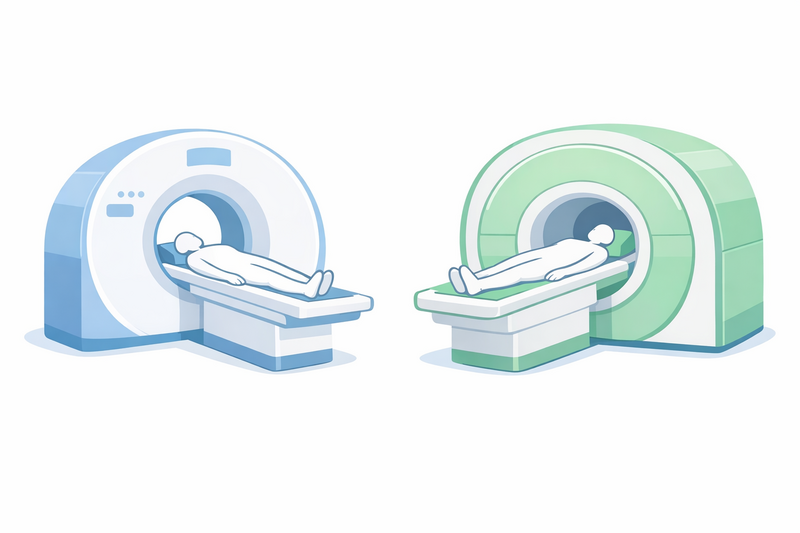
During a CT scan, you typically lie on a table that moves through a donut-shaped scanner. The procedure is usually quick and painless. For MRI, you also lie on a table, but the scanner is a longer tube, and the process can take 30–60 minutes. Some patients may find the MRI machine noisy or feel claustrophobic, but staff can help make you more comfortable.
When CT is preferred
CT scans are often the first choice in situations where speed, availability, or specific types of detail are most important. Some common reasons a doctor may prefer a CT scan include:
- Detecting acute injuries: CT is excellent for identifying traumatic injuries, such as bone fractures, internal bleeding, or organ damage, especially in emergencies.
- Imaging the chest and abdomen: CT provides clear images of the lungs, liver, kidneys, and other abdominal organs, making it useful for detecting tumors, infections, or vascular conditions.
- Evaluating complex bone structures: For detailed views of areas like the spine, pelvis, or facial bones, CT scans offer higher resolution than most other imaging types.
- Guiding certain treatments: CT is often used to guide biopsies or other minimally invasive procedures, as it allows real-time imaging.
Because CT scans are fast, they are particularly helpful in hospitals for quickly diagnosing potentially life-threatening conditions, such as stroke or pulmonary embolism. This speed can be critical when every minute counts.
When MRI is preferred
MRI scans are favoured when doctors need very detailed images of soft tissues, or when avoiding radiation is important. Reasons your doctor might recommend an MRI include:
- Imaging the brain and spinal cord: MRI is considered the gold standard for many neurological conditions, such as multiple sclerosis, brain tumors, or spinal cord injuries.
- Assessing joints, muscles, and ligaments: For sports injuries, joint problems, or soft tissue damage, MRI provides clearer images than CT.
- Identifying certain tumors or cancers: Some cancers or abnormal growths are more visible on MRI, particularly in the brain, pelvic region, or soft tissues.
- Examining the heart and blood vessels: MRI can assess heart structure, function, and blood flow without radiation, making it suitable for repeated follow-up scans.
MRIs are also preferred for younger patients, pregnant women (when necessary and safe), or people who require frequent imaging, to minimise their exposure to radiation over time.
Radiation considerations
One of the biggest differences between CT and MRI is the use of radiation.
- CT scans use X-rays, which involve exposure to ionising radiation. While the amount used in a single scan is generally considered safe, repeated exposure can increase the risk of long-term health effects, such as cancer. For this reason, doctors carefully weigh the benefits and risks, especially for children, pregnant women, and those needing multiple scans.
- MRI scans use magnetic fields and radio waves, not radiation. This makes MRI a safer choice for people who should avoid radiation, including children and pregnant women (although MRI is still used cautiously during pregnancy and only when necessary).
For both types of scans, the potential benefits usually far outweigh the risks. If your doctor recommends a CT scan, it is because the information gained is important for your diagnosis or treatment. If you have concerns about radiation, do not hesitate to ask your healthcare provider for more information.
How doctors decide
Choosing between a CT scan and an MRI is a careful process. Doctors consider several factors to ensure you receive the most appropriate, effective, and safe imaging.
- Your symptoms and medical history: The reason for your scan—such as pain, injury, or a suspected condition—guides the choice. For example, sudden severe headaches might prompt a CT to quickly rule out bleeding in the brain, while ongoing neurological symptoms may point to an MRI.
- Area of the body being examined: Some body parts are better visualised with CT (like bones or lungs), while others are better seen with MRI (like the brain, spinal cord, or joints).
- Urgency: In emergencies, CT is often preferred because it is faster and more widely available, especially in hospitals.
- Patient factors: Age, pregnancy, allergies (such as to contrast dyes), prior imaging history, and implanted medical devices can influence the choice. For example, some implants are not MRI-safe.
- Safety considerations: Previous exposure to radiation, or the need to avoid it, is always taken into account. MRI may be chosen for people who need repeated imaging.
- Availability and resources: MRI machines are less common and can be booked up, while CT may be more readily available in some hospitals or clinics.
After reviewing your case, your doctor will recommend the scan that offers the most useful information with the least risk. Sometimes, both CT and MRI may be needed for a full evaluation.
What to expect during your scan
If you are scheduled for a CT or MRI scan, knowing what to expect can help reduce anxiety.
- Preparation: You may be asked not to eat or drink for a few hours before the scan, especially if contrast dye is used. Remove metal objects and inform staff about any implants or allergies.
- During the scan: You will lie on a table that moves into the scanner. It’s important to stay still to get clear images. The staff will communicate with you throughout the procedure.
- Contrast agents: Sometimes, a contrast dye is injected to help highlight certain tissues or blood vessels. Tell your doctor if you’ve had reactions to contrast in the past or have kidney problems.
- After the scan: Most people can resume normal activities right away. If you received a contrast agent, you may be advised to drink extra fluids to help flush it from your system.
Both CT and MRI scans are generally safe and well-tolerated. If you feel anxious or claustrophobic, let the staff know—they have ways to help you feel more comfortable, such as playing music or providing a mild sedative if appropriate.
Questions to ask your doctor
If your doctor recommends a CT or MRI scan, it’s natural to have questions. Some patients find it helpful to ask:
- Why do I need this scan?
- What information will it provide?
- Are there any risks I should be aware of?
- Is there an alternative type of scan?
- How should I prepare for the scan?
- Will I need a contrast agent, and what are the possible side effects?
Your healthcare provider can explain the reasons behind their recommendation, address your concerns, and ensure you are fully informed before the procedure.
If you are interested in learning more about MRI scans, including what happens during the procedure and what doctors look for, you may find our detailed guide on what to expect from an MRI scan and its uses helpful.
Summary: Making the right choice
Both CT and MRI scans are powerful tools that help doctors diagnose and treat a wide range of conditions. The choice between them depends on the part of the body being examined, the urgency of the situation, your medical history, and safety considerations such as radiation exposure. While CT scans are fast and excellent for emergencies and bone injuries, MRI offers superior images of soft tissues without radiation exposure.
Ultimately, your doctor’s recommendation is based on what will provide the best information for your care, with the least risk. If you have questions or worries, open communication with your healthcare team is the best way to make sure you feel comfortable and informed every step of the way.


