
Food reactions can be confusing and sometimes frightening. Many people talk about having a “food allergy” when they really have an “intolerance”—but these are not the same thing. Understanding the key differences can help you make safer choices, seek the right kind of medical advice, and feel more confident about managing your health.
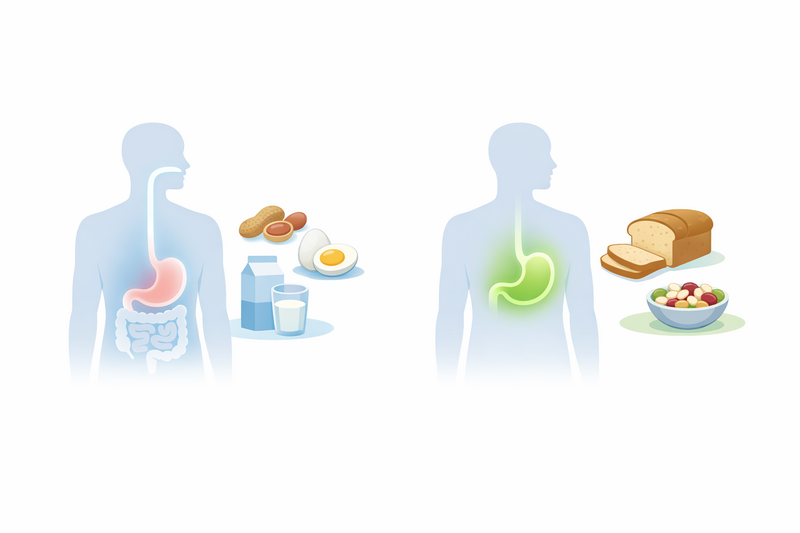
This article explains what separates food allergies from food intolerances. We’ll look at the typical symptoms, the risks involved, how doctors make a diagnosis, and what you can do to stay safe and comfortable in everyday life.
How allergies and intolerances differ
Although the terms “food allergy” and “food intolerance” are often used interchangeably, they refer to two distinct types of reactions.
- Food allergy is an immune system response. Your body mistakes a specific food as harmful and reacts by releasing chemicals that can cause symptoms ranging from mild (itchy mouth, rash) to life-threatening (anaphylaxis).
- Food intolerance does not involve the immune system. Instead, it happens when your body has trouble digesting certain foods, leading to problems like bloating, stomach pain, or diarrhea. These reactions are generally uncomfortable but not dangerous.
Here’s a closer look at the main differences:
- Mechanism: Allergies involve the immune system; intolerances involve digestion or metabolism.
- Amount needed to trigger: Tiny amounts of an allergen can cause a reaction. With intolerance, a person can often eat small amounts of the food without symptoms.
- Severity: Allergies can be life-threatening; intolerances are rarely dangerous.
- Examples: Peanut allergy (allergy), lactose intolerance (intolerance).
Understanding whether you have an allergy or an intolerance is important, as it changes how you should approach eating and managing your health.
Typical symptoms and timing
The symptoms of food allergies and intolerances can overlap, but there are important differences in how and when they appear.
Food allergy symptoms
- Skin reactions such as hives, redness, or swelling
- Itchy or tingling mouth and throat
- Swelling of lips, face, tongue, or throat
- Difficulty breathing or wheezing
- Nausea, vomiting, or diarrhea (less common as the only symptom)
- Drop in blood pressure, feeling faint
Allergy symptoms usually appear quickly—often within minutes to two hours after eating the food.
Food intolerance symptoms
- Bloating and gas
- Stomach pain or cramps
- Diarrhea
- Nausea (sometimes)
- Less commonly, headaches or skin flushing
Intolerance symptoms often take longer to develop, sometimes hours after eating, and are mostly limited to the digestive system. They tend to be uncomfortable but not dangerous.
Why confusion happens
Because both allergies and intolerances can cause digestive symptoms, it’s easy to mix them up. However, allergies often include skin or breathing issues, while intolerances generally do not.
Red flags: anaphylaxis and severe reactions
While food intolerance can cause significant discomfort, it is not life-threatening. Food allergies, however, can sometimes cause a severe reaction called anaphylaxis, which is a medical emergency.
What is anaphylaxis?
Anaphylaxis is a rapid, severe allergic reaction that can affect multiple organs and can be fatal without immediate treatment. It requires urgent medical help.
- Swelling of the throat or tongue, causing difficulty breathing
- Sudden drop in blood pressure (shock)
- Rapid or weak pulse
- Loss of consciousness
Other warning signs include widespread hives, persistent vomiting, or feeling faint. Anaphylaxis can develop within minutes of eating the allergen.
What to do in an emergency
- Call emergency services immediately if you or someone else is having trouble breathing, feeling faint, or has swelling of the throat or tongue after eating.
- If prescribed, use an adrenaline (epinephrine) auto-injector right away.
- Stay with the person and follow emergency instructions until help arrives.
Intolerances do not cause anaphylaxis. If you ever experience severe symptoms, seek medical help urgently.
How diagnosis is made
Correctly identifying whether you have a food allergy or intolerance is important for safe management. Diagnosis may involve several steps.
Medical history and symptom diary
Your doctor will ask about your symptoms, when they occur, what you ate, and how quickly the reaction happened. Keeping a food and symptom diary can be very helpful.
Allergy testing
- Skin prick tests: Small amounts of allergens are placed on your skin to see if there is a reaction.
- Blood tests: Measure antibodies (such as IgE) that the body produces in response to specific allergens.
- Supervised food challenges: Eating the suspected food under medical supervision to watch for a reaction. This is only done when the risk of a severe reaction is low and other tests are unclear.
These tests help confirm whether your immune system is involved, indicating an allergy.
Diagnosing food intolerance
There are fewer direct tests for intolerances. Diagnosis is often based on:
- Detailed dietary history
- Elimination diets—removing suspected foods and then reintroducing them to see if symptoms return
- Specific breath tests (such as for lactose intolerance)
Allergy tests are usually negative in cases of intolerance.
When to see a specialist
If you are unsure about your symptoms, or if they are severe or unpredictable, ask your general practitioner (GP) or family doctor for a referral to an allergy specialist (immunologist) or a dietitian. Proper diagnosis is important for safe and effective management.
How to manage safely
Once you know whether you have a food allergy or intolerance, you can take practical steps to avoid symptoms and stay healthy.
Managing food allergies
- Strict avoidance: The only reliable way to prevent allergic reactions is to avoid the food completely, even in small amounts.
- Read labels: Learn to check ingredient lists for allergens. Be aware of cross-contact risks in restaurants and packaged foods.
- Emergency plan: If you have a history of severe reactions, always carry your prescribed adrenaline auto-injector and know how to use it.
- Inform others: Tell family, friends, schools, and workplaces about your allergy so they can help you avoid exposure and respond in an emergency.
Managing food intolerance
- Limit amounts: Many people with intolerances can tolerate small quantities of the food without symptoms. Finding your “safe” limit can improve quality of life.
- Enzyme supplements: In some cases (such as lactose intolerance), taking enzyme tablets may help you digest the food better.
- Balanced diet: Work with a dietitian if you need to avoid certain foods, to make sure you get all the nutrients you need.
Food intolerances are usually less restrictive than allergies, but it is still important to avoid triggers that cause significant discomfort.
When to seek further advice
- If your symptoms change or become more severe
- If you have difficulty controlling your reactions
- If you are worried about nutrition or quality of life
A healthcare professional can help you adjust your management plan as needed.
If you sometimes experience abdominal pain and are unsure whether it is related to food reactions or another cause, you may find it helpful to read about abdominal pain warning signs and common benign causes for further guidance.
In summary: Food allergies and intolerances may seem similar, but they are very different in terms of causes, risks, and management. If you are unsure about your own symptoms, speak with your doctor or a qualified healthcare provider. Prompt, accurate diagnosis and a tailored management plan can help you live confidently and stay safe.


